Wednesday, May 29, 2013

YouTube covers for fun and/or profit

Covering the songs of other artists is often condemned as being cheap, fast, and populist. Some see it as the junk food of popular culture, others as the American Idol-ization of entertainment, in which technical accuracy trumps creativity, individuality, and the rough and tumble experience of making your mistakes in clubs and cafes on the road, and along the way eventually earning your stripes and learning your craft.


Today it seems we are surrounded by cover songs in greater volume and variety than ever before. The detractors tend to see the exercise as popular culture gone karaoke culture. In the words of the late impresario, designer, and artist manager Malcolm McLaren (not an uncontroversial figure himself) there is a fundamental tension between the authentic and that which can be categorized as karaoke, or inauthentic artistic activity, which he sees as "...life by proxy....liberated by hindsight and unencumbered by the messy process of creativity."

Others have suggested that this karaoke culture of copying and covering is, in effect, a removal of the ego from the performance, a kind of reversal of the culture of narcissism that the late 20th century was said to embody.

In this anonymizing environment we find people 'loosened up', usually in a bar or nightclub, belting out the well-worn hits of classic rock, Motown, or the likes of Madonna and Britney Spears. Great fun for your friends to observe, great way to get attention without the usual requirement of skill, but nothing upon which to build a career. Similarly, there is the case of the bar band or cover band, musicians who play together either as a hobby or as a fledgling career effort, concentrating on a repertoire of popular hit songs, and possibly working a handful of original songs into the set...at which time most audience members go to top up their drink or take a bathroom break and hope to make it back in time for the faithful rendition of Hotel California. Good times were had by both band members and audience members, but professional careers of any note rarely ensued.

And then along came YouTube, where one of the most popular type of video is the cover song, and everything seemed to change. These cover song performances on video are generally the work of unknowns, whose degree of skill or talent can run from absolutely none to completely remarkable, and much of the time they ring through with a kind of authenticity that is nothing less than striking. The performers might be little kids, or grandmothers, or they might be a 6-person group singing hits of yesterday and today while crammed into a car. Some have lofty ambitions, while others are content just to express themselves.


            7 year old YouTuber JD Violin Boy performs Adele's "Rolling In The Deep", one of more than 40,000 versions
 of the song uploaded to YouTube

There are literally millions of cover songs on YouTube, with more than 10,000 uploaded daily. JD Violin Boy, seen above, is among the legion of YouTubers specializing in cover songs.  He is so named because he started out  making videos of himself playing his violin in his room, adding a looping pedal, and then accompanying himself on piano, vocals, and sometimes ukelele. He's been uploading videos for 2 years, has 91 of them in total, and his most popular by far is a Bruno Mars cover that is closing in on 2 million views. But for the most part JD's covers of songs, by artists ranging from Aerosmith to Train, net views in the single digit thousands or tens of thousands.  He is not a household name, nothing he has done qualifies as having  'gone viral', but what is unique here is that with his YouTube channel he has a global stage on which to perform and a small army of fans -- he has 35,644 subscribers to his YouTube channel as of the end of May 2013 - and those things, combined with a love of doing what he does may actually turn into something bigger for him.

His story is both similar to and very different from that of a teenager named Greyson Chance. You may be familiar with him as the kid that made his way onto Ellen DeGeneres' TV show, and whose version of Lady Gaga's "Paparazzi", recorded at his 6th grade school concert in Edmond, Oklahoma in the spring of 2010 did indeed go viral. It now sits at over 50 million views on YouTube, where he has posted 47 videos to channel and attracted 360,000 subscribers. Ellen DeGeneres is but one of his fans, but an important one. So impressed was she by the young man's prowess on the piano that she started a music label, eleveneleven, and signed him. The label specializes in spotlighting the bright young talent found on YouTube and is owned by Ellen's production company, which has affiliations with Warner, as well as the Geffen and Maverick labels. What we have here, then, is the television host subsuming the role of talent scout and producer and bringing all these functions back together, to create a new kind of star, or perhaps more accurately 'microstar'.  Not exactly a case of "entertainment without an entertainment industry", but certainly a rearranging of the usual hierarchies, and an opening up of new possibilities for people that otherwise would probably not have had them.

How did Greyson Chance's album do? Neither blockbuster nor bomb, it peaked at #29 on Billboard, selling 84,000 copies, while his top selling single sold 183,000 copies. To put that into context, see the numbers calculated here, which suggest that 10,000 copies is now, relatively speaking, considered a mainstream success, as, "... of the 100,000 new records that sold at least one copy in 2010, only 17% sold more than 100 copies and a mere 5.5% sold more than 1000 copies...and ~2% sold more than 5000 copies, and a paltry 0.085% sold more than 250,000 copies."

So, if you measure YouTube views on one hand as a metric -- in this case 50 million -- and albums and single sales on the other, you get a sense of where the bulk of the activity now is. And yes, artists can monetize with that level of YouTube views, with my estimate for Greyson Chance's 50 million views being approximately $250,000 - $400,000, with variations for advertising rates and views in different countries, and an allowance must be made for percentages of the revenues that go to any managers, agents, or the label, according to the terms of his particular deal.

And what about JD Violin Boy, the little guy in his room with the keyboard, violin, loop pedal, and ukelele?  He's now 9 years old, his YouTube channel has just over 5 million views as of today, and in the last 30 days he has been averaging ~33,000 views day, which translates to 1 million views per month. This may not be anything like Greyson Chance's payday but if you're 9 it's better than a lemonade stand. Or you could say that a YouTube channel is what the new lemonade stand looks like for those with the talent and initiative.


In follow up posts I'll look at a group of YouTubers that has managed to attract attention, with varying levels of success, by posting videos of cover songs, and will lay out a framework for thinking about this phenomenon as an activity that is particular to this moment in time of participatory culture and demassified, decentralized audiences and producers.


PS As of May 30th, this blog post has been approved by JD Violin Boy.


JD & I started emailing and the next thing I knew I was doing a full interview with him about his life as a prolific young YouTuber. Read that interview here.

For a follow-up post on YouTube cover songs & instant nostalgia click here.

And/or for the follow-up to that post, about performers who started out doing covers on YouTube and ended up being signed by major labels, you can click here.

Wednesday, May 15, 2013

The Dead Giveaway Phenomenon: 1 week later

It's been one week since we were introduced to Charles Ramsey, the Cleveland man credited as the hero behind the rescue of the three kidnapping victims. In the wake of the kidnapping, and Ramsey's various media appearances, a series of phenomena unfolded, including the Charles Ramsey meme, in which the inner city everyman's persona started turning up as a form of Internet currency. Perhaps the most high profile of these memes was The Gregory Brothers' Dead Giveaway, a video and song that captured the spirit and essence of the media-friendly Ramsey, even as the horrors of the larger news story unfolded.

This blog has been keeping tabs on the phenomenon over the course of the past 7 days, and now offers this '1 week later' look at its various angles and players.  (Update to 5/22/13: The second chart below adds the data for two weeks following the video's posting on YouTube).

Ed. Note: And please bear in mind that I am not meaning in any way to downplay the extreme seriousness of the story of three young women help captive for a decade and subjected to unspeakable conditions. It is truly a heinous story. This blog merely looks at the parts of the story related to media, digital distribution, and brands. Thank you for your granting me this understanding.

The Gregory Brothers Brand

My previous post tallied the numbers for the Dead Giveaway video in detail and today, 5/15/13, as of noon Eastern time the video's total number of views on YouTube is 12,207,329. As this screen shot from today shows, the Gregory Brothers' total view count for their YouTube channel is 523.3 million views and their subscriber count is 1.75 million.


Compare these figures with their 1.68 million subscribers at this time last week, and their approximately 502 million channel views. This mean they have accrued ~20 million new views to their channel, of which ~13 million have been for Dead Giveaway as of today. At the time of Dead Giveaway's peak popularity late last week the video was receiving  ~100,000 views/hour, and now, one week later that number has fallen to ~500-600,000 views/day. This graph illustrates the growth of YouTube subscribers in the days leading up to the launch of the Dead Giveaway video, where average subscribers to the Gregory Brothers' channel came in at ~1600/day, and went as high as 18,000/day at the story's peak last week. The number is now now plateauing toward ~5000 channel subscriptions/day and it will be interesting to see the level at which the new number of daily channel subscribers eventually settles.

Daily subscribers to Gregory Brothers' YouTube Channel May 5-14, 2013

Note:  Data for 2 weeks following the posting of the Dead Giveaway video shows daily subscribers to the Gregory Brothers' YouTube channel starting to settle around the 2800-2900 per day level, up from an average of ~1600-1700 per day prior to the video being posted on May 7th, 2013. In other words, the Gregory Brothers have, at least in the short term, increased their daily number of subscribers by approximately 80%. As of today, 5/22/13 their total subscriber count is 1.78 million.

Daily subscribers to Gregory Brothers' YouTube channel: May 14-22, 2013

If you're wondering where The Gregory Brothers sit in the pantheon of YouTube celebrities, as of today they are the 177th most popular YouTube channel with 523,304,931 views. You may or may not have heard of them prior to this story, but this musical commentating combo has managed to carve out a nice, sustainable niche for themselves and have done so by building their audience from the bottom up, on a publicly shareable, online, on-demand video platform. And in the process hey have created their own new link in the value chain, with their wry, autotuned twists on stories of the day. They have successfully created their own branded channel on YouTube, their own line of merchandise, including t-shirts and the Songify app, and are also bookable for speaking opportunities and your special events.

Among the takeaways from the Gregory Brothers angle of this story is that for phenomena with a short shelf life, the strike must be surgical, with deployment of the content within hours of it first appearing. There is literally no time for the this is something that can only happen outside the architecture of a hierarchical industry. The Gregory Brothers are an example of today's media production as cottage industry model; small, self-directed, and agile but with global, instantaneous distribution.

The Charles Ramsey Brand 

From Cleveland dishwasher to hundreds of thousands social web mentions and media exposure worldwide, that's the kind of week Charles Ramsey had. But as the chart below indicates, those mentions are now tapering off.  

Social web mentions of Charles Ramsey May 6-14, 2013

So what happens now, you may ask. Does Ramsey eventually return to the obscurity of his Cleveland day job? Does he get his own reality show? Does he become a commercial pitchman, as the Internet-famous Double Rainbow guy did for Microsoft? Too soon to call, but I have just learned that the Charles Ramsey action figure, both the talking and non-talking versions, has just become available.

And now, let us begin our analysis with the corporate brand most closely associated with Charles Ramsey:

The McDonald's Brand

In his his first televised interview, on Tuesday May 7th, 2013 Ramsey said:


And here's how McDonald's responded to their brand mention the same day the story broke:


Note the number of retweets and favourites, illustrating a level of approval from the body politic that is the Twitter community.

The company responded swiftly, which some lauded, and others criticized. As it turned out, this is a spokesperson with edge, and not only on camera. We learned on day two of the story that Ramsey also happens to have a history of domestic abuse convictions (Ed. Note: for which he has served his time, and which was, according to Ramsey, a corrective experience that made him a better man.)

Micro-debates about the best way to honour Ramsey flew around on Twitter, PR experts chimed in, some suggesting that McDonald's reacted prematurely, and perhaps should have exercised the option to remain silent until further details emerged. Business publications such as Forbes offered their viewpoint, spelling out the ways in which engaging with the story may be 'treacherous territory'.

Meanwhile, the online public was busy. Very busy. Here is a gallery of some examples of what the people have been up to online with the McDonald's/Charles Ramsey story:


Photoshopped Charles Ramsey/McDonald's billboard
Charles Ramsey as Ronald McDonald

Add-your-own-caption photos of the Charles Ramsey meme
Fake Charles Ramsey Twitter accounts


But back to Charles Ramsey.The printing presses churned with t-shirts, local Cleveland restaurants created Charles Ramsey sandwiches and pizza slices, with proceeds going to the rescue victims. And then there was the local Cleveland man who had his calf tattooed with an image of Ramsey's face.


What happens next remains to be seen. Meanwhile, the Internet has been busy with all things Ramsey. And while the pundits and PR execs think about how to proceed, the faux-mercials, like this one, will continue to be posted.


May 23rd update:  After almost two weeks of corporate silence McDonald's donates $10,000 to a missing & exploited children's fund and offers Ramsey a year's worth of free food, while a group of Cleveland area restaurants have added Charles Ramsey sandwiches and burgers to their menus in addition to offering him free burgers for life. Ramsey's attorney, speaking on behalf of his client, said that Ramsey would like any proceeds to go to the victims and that he has not authorized any merchandise made in his name.

Monday, May 13, 2013

Celebrating 5000 Page Views: Cue Kool & The Gang

Back at the end of February 2013, when I started this blog my aspirations were modest. More than anything I wanted to create a central repository for the ideas I've been encountering during my stint as a digital media researcher in Cambridge, Massachusetts. Surrounded by big thinkers thinking deep thoughts about things big and small has provided me with lots of fodder, and today I am pleased as punch to announce that we have just hit the 5000 page view mark here at De-mass'd. I say we because I couldn't have done it without you, fair readers. So please, help yourself to some cake pops and refreshments while the musical entertainment below prepares for the show. Special Club 5000 shout outs to power blog readers and endorsers John Martens of West Saint Paul, Minnesota and Peter Krogh of Washington, DC, as well as to Ruby Karelia Strong, whose blog, started when she was just 9 years old, inspired me to take the online publishing plunge myself.


Thanks are also in order to Macklemore, whose story of being the first artist not signed to a label to reach #1 on the charts, I chronicled here, and which has been the most popular series of posts by far. (Ed. Note: I got a bit carried away and it turned into a 7-part post). And let's not forget Charles "Dead Giveaway" Ramsey, the Cleveland hero whose songified news interview gave me another opportunity to do some numerical analysis of a popular media phenomenon. And in between there's been lots of rumination about the shifts from mass-produced media for mass markets to micro-produced media for niches, which now can also function as markets. It's not the old superstar-level of success in the entertainment industry but I think that overall it's good news as it enables the makers to create and publish and distribute at a fraction of the previous cost and lets audiences decide for themselves what constitutes an interesting piece or product.

So here's to the next 5,000 -- and now, take it away Kool and the Gang...

Thursday, May 9, 2013

The "Dead Giveaway" Scorecard

It's been about 45 hours since The Gregory Brothers posted their musical tribute to Charles Ramsey, the Cleveland man heralded as a hero for his role in freeing 3 young women from a decade of captivity in his neighbour's home.

Note: Scroll down to New! Updated numbers to noon on Sunday May 12th, 2013 for the latest stats.


`
The Gregory Brothers deep in musical contemplation

My previous blog post on this story focused on the speed with which the musical combo was able to not only create their work, but to get it out to a global audience, using just their YouTube channel Schmoyoho ('accent on the yo', as they like to say), and the magic that is the Twitter hashtag. Between such hashtags as #clevelandmiracle, #charlesramsey, and #deaddgiveaway, NASCAR-speed distribution took hold online, and within hours word of the droll video had begun circulating on Twitter, Facebook, and on blogs, leading to close to a million YouTube views within 24 hours of posting. At approximately hour 36 CNN was on the story of the Internet's frenetic hero-ization of Ramsey.

In addition to the video views, The Gregory Brothers had picked up about 25,000 new subscribers to their YouTube channel, bringing their total to just over 1.7 million by mid day Thursday. (For comparison purposes, their usual daily subscriber gain on YouTube has been averaging ~1600). And on the social media front, the Twitter and Facebook feeds of early adopter types became conduits for the story's rapid reproduction, while on the front page of Reddit Charles Ramsey threads and images proliferated, resulting in thousands of comments and millions of page views. 

Adding to the Ramsey-mania was a tweet from comedian Patton Oswalt that incorporated one of the catchphrases that was now in brisk circulation. Oswalt's wry tweet was then retweeted over 6,500 times.

The result of all this activity to The Gregory Brothers video? The following chart shows the number of views of the video to 6 p.m. Eastern on Thursday May 9th, 2013.


For those wondering what this translates to in terms of earnings for The Gregory Brothers, well, that depends on the rate at which they are able to monetize their YouTube channel. But, seeing that they have a proven track record, with over 500 million views total, my guess is that their CPM (the cost an advertiser pays per thousand impression) is better than average, therefore I estimate their earnings from this video so far (~4 million views in the first 48 hours) to be somewhere between $25,000 and $40,000. (If you think these numbers are either ridiculously high or low, feel free to leave your comments and we can triangulate.)

New! Updated numbers to noon on Sunday May 12th, 2013. The table above took us to the early evening of Thursday May 9th, 44 hours after the Dead Giveaway video was posted. The table below picks the story up late morning of Friday May 10th and takes us through to the breaking 10 million views by noon on Sunday May 12th.  Note that the highest accrual of views happened between Thursday midnight and Friday noon (2.3 million) and that the view rate had dropped to 1.74 million for the following 12 hours.  On average the video is receiving ~100,000 views/hr. worldwide, although the bulk of the views seem to be occurring in North America.  My estimate for the amount of revenue earned by the video, at the 10 million view mark, is $50-$100,000.


Also note in the graph below that the number of daily new subscribers to the Gregory Brothers' YouTube Channel Schmoyoho peaked between Thursday May 9th and Friday May 10th, suggesting that the viral coefficient had already done its best work and was on its way to establishing a new plateau (the previous plateau for subscribers to the channel was ~1600/day).


...And for extra credit:

There's more on the social media activity around Charles Ramsey and Dead Giveaway in this post from the very conscientious folks at KnowYourMeme. 

And from this afternoon there's this radio interview and transcript on the topic of the viral spotlight being shone upon the 'hilarious black neighbour' stereotype.  The piece features the writer who wrote about the trend in Slate earlier this week.


Proceed to follow up post here, as we check in with the story 1 week later.

Wednesday, May 8, 2013

Mach speed production: The news, the catchphrases, and the Gregory Brothers

When the news broke on Monday that three young women, presumed dead for a decade, were discovered to be living in the home of a middle aged man in Cleveland, the media erupted.  So much so that the round the clock coverage of the Boston Marathon bombing all but disappeared, even though that story was still in the 'no cemetery wants the body' stages. Nevertheless, the 24 hour media cycle continued online and on CNN, with bits and pieces of the story of the womens' captivity over the past ten years starting to emerge.


In short order the requisite interviews with locals and neighbours had begun. By Monday night we met the man who was to be dubbed the story's hero, though he himself rejected the title. His name was Charles Ramsey, and he was the person who heard the screaming coming from the house that eventually led to Ramsey breaking down the door and releasing the women. Ramsey had lived next door to Ariel Castro, age 52, the man identified as the captor, for about a year. And he was, well, in a phrase 'ghetto fabulous'....and I say this with utmost admiration. The man knows how to tell a story.  Though he had only lived next to Castro for a short time was able to paint a vivid picture of what it was like to be porch-by-porch with the man now associated with a troika of hostages. "You got to have some big testicles to pull this off, bro, because we see this dude every day. I mean every day," Ramsey said. "I barbecue with this dude. We eat ribs and what not and listen to salsa music. Know where I'm coming from?"


But it was this line -- "I knew something was wrong when a little pretty white girl ran into a black man's arms. Something is wrong here. Dead giveaway." --  that inspired musical parodists The Gregory Brothers to get out their recording gear and start 'songifying'. This was a term of their coinage used to describe their art of taking news clips and marrying them with beats and autotuned vocal effects to create 2-3 minute video commentaries on stories in the news. By Tuesday afternoon The Gregory Brothers were hard at work and posted this teaser on Twitter.


...And by Tuesday evening they had posted Dead Giveaway, their tribute to Charles Ramsey, America's newest hero.


In its first 12 hours online the video had received 225,000 views, #deadgiveaway was a muchtrafficked hashtag, and the video was trending on Twitter. This is not viral, by any means, but this is something The Gregory Brothers are able to make a living doing. They have 126,000 Facebook followers and 37,800 Twitter followers....not overwhelming numbers, but enough that their YouTube channel has been able to amass 1.68 million subscribers and over 500 million views. (Of which more than 100 million views were chalked up with their Bed Intruder video of July 2010, similar in theme to Dead Giveaway, in which the "hilarious black neighbour" -- a problematic trope, but inarguably a popular one -- becomes the 'brand' of the story in the media.)

But the larger point, as far as this blog is concerned, is that such are the new processes of media production, and that this is the new speed at which things can be taken from conception to execution to global distribution. In this case, were there traditional middlemen involved, such as producers and editors and broadcasters, the piece would probably never have gotten made, or if it did, we wouldn't be seeing it within hours of the original news story breaking.

Well done, Gregory Brothers, well done Internet.


See Part 2 here, which checks in with the story the following day, as the video nears 5 million views,  and Part 3 here, which picks up the story one week later, as the Internet teems with jpg's, gifs, and fake McDonald's commercials 'starring' Charles Ramsey.


Tuesday, April 30, 2013

Better viewing through chaos

In the last post we looked at the coming of age of YouTube as an increasingly serious contender in online entertainment. Numbers so large that they are difficult to wrap our heads around: One billion unique users every month, over 4 billion videos streamed daily, over 6 billion hours of video viewed per month, and 100 hours of video uploaded per minute. In fact, YouTube viewing has become such a popular and mainstream pastime that JC Penney employees were tracked earlier this year and the results indicated that they had watched five million YouTube videos, from the office, over a period of four weeks. I raise this point because it's an example of the completely different context in which media and entertainment are now able to reside. Previously this thing called 'media' was something we experienced at home, or in our leisure time, on devices that were either tethered to rooms, or on Walkmans and Discmans (or even transistor radios, for people who go back that far...hello to you, if you do) that we wore while walking around, exercising, or on bus, train, and subway journeys. And it was something that came from locales of industry, generally hierarchical structures that let certain things past its gates, and kept others out, with the assumption that industry knew better than audience what the audience desired.

Model wearing early Walkman, 1980.   
As things shifted from the vaguely personalized, but still centralized, media model of, say, the Walkman days to today's anywhere/anytime/everywhere/all the time media, new ways of thinking about the production and consumption sequences and cycles become more important. The why people do what they do, along with the where, how, and under what circumstances, are immensely helpful in understanding new systems that at first blush seem to defy the logics we have used to guide us in the past. It is the desire of this blog to provide readers (and in the process the writer) with some insights into how we might better navigate this shift from fixed, filtered, and scheduled industrial-grade media to one where the experience of media is ubiquitous and self-serve and content is constantly in motion.

As we venture down that path we entertain such questions as:

Is niche content just for niche audiences?

- What happens when media content can be created by the individual and achieve free, global distribution, without the interference of gatekeepers?
 
- Will the result be something of interest to anyone outside of the person that posted it and his/her social circle? 

- Could an online platform designed without the elements of an organized system gain enough traction to take a bite out of the public's media consuming practices? 

- Are there forms of entertainment that a more freeform platform than traditional broadcasting can provide that could now find a 'big enough' (as opposed to mass media 'big') audience?

Earlier posts have looked at specific industries, such as music and film, and the new challenges that come as the pendulum swing toward digital. This series of posts looks at YouTube, the online video platform that spans multiple screens and moments, that breaks almost all of the rules created by the entertainment industry in the 20th century, as a framework for thinking about new channels of distribution and the new forms to which they give rise.

As is the case with so many startling statistics, the billions of this and that that we keep seeing pop up with regard to YouTube are, after all, just numbers. And numbers only mean something in the context of other numbers. So I whipped up a little compare and contrast table, using data from digital analytics firm comScore, to get a snapshot of how things have evolved in the online video marketplace over the past four and half years. (I picked this slice of time because I wanted to see the numbers before players such as Hulu and Vevo came into being, and  before Facebook enabled video embedding.)

And here's what we have:

Data compiled from comScore quarterly reports


Some takeaways at a glance:

  • Internet video went from essentially zero to 33 billion in a handful of years. 
  • The amount of online video has almost tripled in the 4+ year period being looked at here.  
  • Note: not included in the above table is the number of minutes spent on YouTube monthly, which is approximately 62 billion, spread across approximately 15.5 billion videos, for an average viewing duration of around 4 minutes. 
  • The plethora of small players and pirate sites make up almost half of online video viewing, but, nevertheless -- surprise surprise -- the world of online video is ruled by YouTube (or, since the late 2006 acquisition, Google, hence its appearance in the chart above under the umbrella of 'Google sites'). 

It's also interesting to observe that even in the wake of the arrival of the industry-sanctioned sites such as Vevo and Hulu, YouTube remains king. Everyone else, even Facebook, with its 1 billion+ users, and established online entities (e.g. Microsoft, AOL, Yahoo!) and offline entities (e.g. Turner, Viacom, ESPN, Disney) net only single digit share of online video viewing.

Although an average of 4 minutes of viewing does not make for a compelling comparison with television or even radio, the abundance and variety of video content now available online has created a group of new viewing experiences that don't fit within the rubric of television, but do speak to what segments of the audience definitely want.  While broadcasters and networks structures were/are skilled at making mass entertainment for mass audiences,YouTube is showing that it has great resonance with niches. And when I use the term 'niches' I don't only mean content for which there is a small or select audience, but also the things for which we didn't even have a category, such as five seconds of Dramatic Chipmunk (now closing in on 40 million views).


But it's not like these things are obvious, even to those in the higher echelons at YouTube. Just this week a YouTube executive admitted that even he had erred in his strategic thinking about what the service does best. "I thought YouTube was like TV", he said, "but it isn't." This after what the Wall Street Journal reported to be a $350 million investment in the original channels initiative during 2012 and 2013, the objective of which was to segment audiences, encourage longer viewing sessions, and to attract 'blue chip advertisers'.  Not at all Dramatic Chipmunk.

At its core YouTube is not like TV, and TV is not like YouTube, as much as industrial logic may want it to be. Just as radio listened to in your bedroom or your car is an entirely different experience from using Spotify or Pandora on your phone, tablet, laptop, or desktop computer. These inherent digital differences help explain why, e.g, when Craig Newmark started Craigslist in San Francisco in the late 1990s (resulting in the world's largest online classifieds service) only in theory could it have been the domain of newspapers. And so it is with online video and the established players in broadcasting, such as networks and cable companies. Only in the broadest sense are, e.g, NBC and YouTube operating in the same space. In both of these cases cases -- i.e. online video and online classifieds -- the reason not a lot of attention was paid to the up and comers is that no one in the big organizations thought there was a serious threat to their core businesses. The new spaces were looked upon as fraught with issues such as inferior selection/quality and therefore small market share, not to mention assorted legal considerations, the loss of control that comes with interactive platforms, and the challenges of monetization. Overall the risks seemed to outweigh the benefits and the media-entertainment complex continued on its way. Ed. Note: And in possibly the worst case of fumbled industry ball, there's the music labels losing out to iTunes, a milestone which we are celebrating the 10th anniversary of this week.)

Yes, hindsight is a privileged position from which to judge the past, but that's not my objective here. I think we're all better served by a closer look at why large organizations that ostensibly had the
opportunity to stake out new ways of doing business did not. We can all imagine the talk around the meeting room tables, where these topics were likely raised once, if not several times. These new options were 'too off focus', 'too uncontrollable', and in a phrase 'not what we do'. It was the chaos that the new systems brought with them, chaos that posed a threat to the existing structure, that was simply too big to contemplate. Which just goes to show, particularly in matters related to technology and media, we can't use the categories that we currently have to think about how things may look in the future.

And this is what disruptive innovation truly looks like. The story of things considered (if considered at all) to be small potatoes, if not waste of time exercises. Products or services that were more limited and inferior to those of the major players and then, over a period of time, the incumbents are overtaken by the newcomers. Things of which we would initially ask "why on earth would I ever do/use that?" and then, in time, a logic to the chaos starts peeking through and "why would I do that" becomes "why not"? -- Twitter being perhaps the most poignant example of this why-to-why-not shift. At the same time, if there's not a saying like 'the difference between crazy and feasible is a couple of years', perhaps there ought to be.
In 2009 Alan Kirby used the phrase haphazardness to describe an essential quality of YouTube. "...Rhetorically everything is up for grabs...in process, made up...as it goes along", (p. 119) , or as John Hartley (2011) put it, rife with "unsystematic exuberance and unambitious content" (p.107) , yet, as he himself admits just a few lines later, YouTube ushers in an important new era of productivity and representation.

Upcoming posts will consider these topics in greater detail. I'll look at YouTube as an open and wonderfully chaotic platform, from which things of great interest and value can be constructed, both within the inherent chaos and within some of the structures of order that have more recently been layered onto it. And the rest, the approximately 2/3 of videos uploaded that receive fewer than 1,000 views and cost far more in storage and streaming costs than they will ever bring in via advertising, well, they just peacefully co-exist.  Only in the digital world could this ever be the case.

June 2nd, 2013 update:

I just found this enlightening blog post from YouTuber Hank Green, a participant in the funded YouTube original channels initiative with the channel Crash Course that offers up 5 to 15 minute videos on topics ranging from world history to chemistry and literature.


Though grateful for the support received from Google & YouTube he has referred to the effort as a 300 million dollar hole. Though a few bona fide hits emerged from the project, over 2/3 of the channels were not renewed with additional funding. Hank's channel has an impressive 735,000 subscribers and 39 million views and despite the cash injection received he maintains that when it comes to online video "it's now how good it looks, it's how good it is".


Related Post: Podcasting: Art, Craft, or Reaching The Niches  

Thursday, April 18, 2013

YouTube: What happens when TV goes online


What happens when this thing we think of as television goes online? At the heart of this question is the very issue of the massification of media that grew out of the centralized, industrialized structures of the 20th century vs the demassification we're seeing in this century, with the extreme fragmentation of audiences, platforms, and content categories.

As this takes place -- and we are experiencing this shift in real time -- we have the opportunity to run some little experiments, which I will chronicle here in a series of blog posts. I want to tackle a few issues:

  • Look at the extent to which this thing we have become accustomed to as the electronically transmitted visual medium ceases to be television, enmeshed as it is with all sorts of industrial, commercial, and cultural considerations, when content and distribution shift to an online environment. 
  • Consider if this new platform, with its wild west, open to anyone ethos, threatens the omnipotence of television in any significant way.
  • Document the spillover of practices from online video to TV and from TV to online video.
It's all up for examination, so today on the blog, Part 1 in a currently open-ended series on ways to think about YouTube, the world's leading online video platform, that has been called everything from an "infinite gallery of...poor fools dancing, singing, eating, washing, or just staring into their computers" (Keen, 2008) to a new global media paradigm.


Young woman staring into computer, 2008.  6.7 million views as of 4/18/2013

Let's start with some basic binaries of the world of television, and its attendant systems, hierarchies, and strengths, and do a quick compare & contrast with the anything-goes world of YouTube.

At first glance you would think -- as most of us did when we first experienced YouTube -- that it had little chance of dethroning, or even affecting the course of  mainstream entertainment; mainstream entertainment being what it is as a result of decades of investment, talent cultivation, rigorous audience analysis, and marketing and promotion. Why some people would post to YouTube seemed a simple enough proposition, but why anyone would watch this unfiltered grab bag of home movie clips for more than the experience of a brief oddity was largely mysterious.

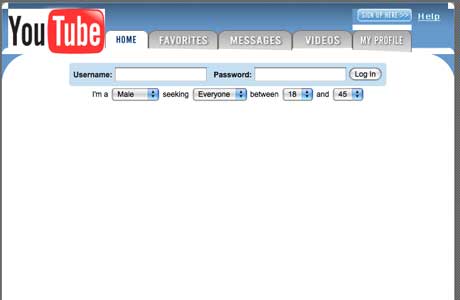
And even the founders of YouTube weren't sure what their platform was best for. In fact, in its earliest incarnation in Spring 2005 there were dating site elements on the home page as online dating was a big growth industry at the time, and one of the initial ideas was to use the online video repository as a way to meet people while on the web.


Fast forward to today, and scan some YouTube stats, as of Spring 2013:

  • 1 billion active visitors per month 
  • 72 hours of video uploaded per minute (up from 48 hours per minute in 2011, 24 hours in 2010, 14 hours in 2009, and 9 hours in 2007) *Note: As of May 20, 2013 the figure for hours uploaded per minute is 100.
  • Tens of millions of channels, started by everyday people.
  • Tens of thousands of of YouTube partners, i.e. content creators that meet the criteria to monetize their uploaded videos.
  • A few hundred YouTube Original Channels, an initiative launched in the fall of 2012 which showcased content creators from the worlds of music, comedy, sports, fashion, health & fitness, beauty, design, and assorted lifestyle channels, as well as channels carrying the names of well-known celebrities like Jay Z and Tony Hawk and lesser known performers like Smosh and Nerdist.A first round of $100 million was announced in October 2011 followed by a second round of investment of similar size in October 2012. More to come on the YouTube channel initiative in forthcoming blog posts.
So how did a website that wasn't even the first, or second, but the fifth entrant to universal video uploading (preceded by MetaCafe in July 2003, Vimeo in November 2004, Google Video in January 2005, and Daily Motion in March 2005) grow into the de facto video library of the world, one that would alter both our experience and definitions of visual entertainment?  The reasons for why one company succeeds while others flounder, or become also-rans, are many, but a pretty convincing discussion on this question can be found here.

But back to YouTube, and its extraordinary growth curve that brought it from single digits hours of video being uploaded per minute for its first 4 or so years of existence, to the first sea change, around 2009, when numbers jumped from uploads of 10 hours/minute to 25 hours/minute, 72 hours of video/minute by 2012, 100 hours/minute by the end of 2013 and almost certainly more by the time you're reading this. On the consumption side YouTube is at approximately 4 to 5 billion views per day.


And you could say -- and many have -- that this is a 'so what' statistic, that it only proves that because there are no costs associated with uploading video to YouTube there are no disincentives. When cost of entry is zero, why not enter? You can use YouTube to post videos of your kids and pets, you can use it to showcase your budding, or even middling talents as a singer, comedian, animator, makeup artist, etc. Does this then make it a digital dumping ground? The answer would be yes, but that in the case of YouTube it turns out not to be a bad thing, despite the high costs of storage, streaming, and keeping the site running.  These kind of economics would never pass muster in the world of mass media, which is all about carefully created content and carefully segmented audiences, but online, where shelf space is potentially infinite it can work.

Consider these numbers, though a few years old, but note that 63% of videos posted to YouTube receive fewer than 1,000 views, and just 1/3 of 1% receive over 1 million views. My hunch is that while there are now more videos achieving millions of views than in the early days of YouTube (as reported in an earlier post here), the prodigious volume of videos posted (72 hours per minute and growing) keeps the relative percentage of hit, or popular, videos quite low.

Source: http://articles.businessinsider.com/2009-05-20/tech/30027787_1_tubemogul-videos-viral-hits

And yet, while the YouTube curve of videos uploaded per minute and views per day grows exponentially, there's this data (from 2011, though the relative numbers have not changed a lot since then) which shows that for all its corralling of eyeballs, YouTube is still a bit player in the view catching sweepstakes.  For TV's 150 hours viewed per month (in the U.S.) YouTube gets just three.
From: http://www.businessinsider.com/chart-of-the-day-tv-online-video-2011-4

So why all the hubbub? And how could this possibly be working, working in the sense of efficiently providing audiences what they want to see, and working in the financial sense, as in how is this economically feasible?  Some of the answers, it turns out, lie in the counterintuitive.

See the next post in this series here.

But first: don't miss The Gregory Brothers' musical history of YouTube, on the occasion of its 8th anniversary, told in 3 mid-tempo minutes.


Related Posts: 

Podcasting: Art, Craft, or Reaching The Niches 
YouTube: When the going gets weird...YouTube goes mainstream?
The Stars of YouTube: Buffer Festival 2014
Platform Capitalism, or why your parents don't understand the Internet